Youth Notices

Sermon reflections, notices and resources for our rangatahi and their whānau

We  believe youth and family ministry at St. Ninian’s is about forming people, not running programmes. When young people are truly seen and families are supported rather than stretched, faith has space to grow naturally. Our hope is for a ministry grounded in grace, relationship, and shared journey – where faith is lived together across generations.


Listening to Kids’ Voices, by Caroline*

*slightly edited for written format

I am ten years old and a year six. I am writing about the importance of listening to kids' voices. I have personally felt pain from not being heard.

Have you ever realised that some adults talk down to children instead of talking and listening to them like  normal people? I have personally experienced this problem and it's a terrible feeling. It was especially painful because it was one of my grandpas who didn't listen to me. Some kids are pushed away, interrupted, not invited to talk, ignored, and talked down by adults. Kids aren’t usually allowed to talk to large groups of people about very important things, or if they are, they are ignored and their ideas aren't listened to. Adults don't normally invite kids into important conversations. They sometimes shoo them away and say things like, “You’re too young to talk about this or that."

I have a few possible solutions that might help with this problem. The first idea is that we have a group of youth who want to talk about important things and together as a group we can talk to adults about it like the "Future Council." If you are wondering about the Future Council, it was a documentary about kids who wanted to help nature and who talked to CEOs about protecting nature. The second idea is that we could have youth in the parish council. The most important thing that you can do to help fix this problem is to listen to children and be supportive of them however you can, even if you just listen and talk to them. You can invite kids to join your conversations about important things. Just remember that kids are also people like you., so talk to them like people, not like mice. 

Thank you for reading what I have to say about this big problem. I really hope that what I have said will be helpful for kids and let them be heard by adults. I also hope that if you do use any of my ideas that they work great. If you have any questions about this you're welcome to ask me anytime. I hope you are willing to help kids who are in a lot of pain because of not being listened to by adults. 

Identity, by Kwinn

Today, many young people face a challenge that isn’t always visible – but it’s deeply felt: Understanding who we are. In schools and communities, identity can be complicated. We’re expected to fit in, but at the same time, we’re trying to stand out and be true to ourselves.

For some of us, it means balancing different cultures, languages, or expectations at home and at school. For others, it’s about feeling judged for how we look, how we speak, or what we believe. Sometimes, it can feel like we have to change who we are just to belong.

This can lead to self-doubt, pressure, and even feeling like we don’t truly belong anywhere. And that can be really hard.

But identity is not something we should hide – it’s something we should be proud of. Our cultures, our stories, and our experiences make us unique and powerful.

When schools and communities create safe spaces where everyone is accepted, young people can grow with confidence and strength.

Because when we feel seen, heard, and valued, we don’t just fit in – we thrive.

Disability, by Loki*

*slightly edited for written format

Kia ora. I’m Loki Remaklus, and I’m in Year 12 at Taitā College. I attend secondary school as a 16-year-old neurodivergent, disabled trans man. I am here to talk about living as a disabled young person.

Too often, neurodivergent teens are dismissed as “anxious” and “depressed” when it goes so much deeper than that, problems that adults aren’t always willing to discuss. Too often, disabled teens are dismissed for having “growing pains” or are called “overdramatic”. Too often, it’s seen as “unimportant” or “not bad enough” when we are in pain every day, but it’s not enough to make us bedridden; when we’re overstimulated in class, but it’s not so bad that we visibly break down; when we’re too tired to think, but it’s not enough for us to forget to smile.

Students use “retarded” and the former special education block to insult each other or call things stupid. They make disability a dirty word, and J-block becomes a synonym for “stupid” or “boring” in the student lexicon because the idea that disabled people are stupid or bad isn’t contested enough. For those of us who aren’t always obviously disabled, we aren’t necessarily bullied as much as those who are more visibly so, but classmates exclude and dislike us nonetheless. My teachers don’t join in; they aren’t openly ableist toward us. But they don’t always speak up. Too often, no one, adult or peer, speaks up against the hate. And with limited representation of disabled youth, peers don’t put in the effort to think differently.

If I didn’t tell you that I am disabled, you might not know. You might not consider that the limp isn’t just a normal injury, that the exhaustion is partly from unceasing daily pain, that the sitting while singing in church is because my joints don’t seem to understand the concept of staying in place properly. You might not consider why I don’t initiate interaction or why I bring a stuffed bear to church when I’m 16 years old. This isn’t to fault you for not knowing, but to point out that… you didn’t know, as many people don’t know.

In some ways hidden disabilities can be easier — I don’t necessarily get as much ableist bullying as people with more visible disabilities, I don’t have the pushiness of people insisting I need help or offering unsolicited advice, I’m not treated as incompetent or helpless as more visibly disabled people can sometimes be unfairly treated. But at the same time, it can be very difficult. I can walk, so it’s easy for others to ignore how painful it is. I walk without obvious mobility aids, so it’s easy for others to believe that I’ll just feel better to dance next week. I can stand and walk, so it’s easy for doctors to dismiss the pain and dizzy spells. My school grades are very good, so it’s easy for others to assume that because I’m smart I must be okay. I don’t faint, so it’s just confusion when I have to sit down upon standing up, my vision greying out and my brain going fuzzy. No one’s there to see me with a bloody nose at 2 AM, so lightheaded that I can’t get into bed, so lightheaded that all I can do is lie on the floor and hope that I fall asleep.

The thing with chronic pain is that you get so used to it, you don’t even react; even when the pain is so bad that I can hardly stand, I can force myself up the ladder into my bed because that’s just what I have to do. I walk to the bus stop after dance, my legs in so much pain that I feel nauseous, but I don’t say anything about it because that’s normal. I walk with my joints partially out of place but not enough out that I can fix it; I don’t cry about it because I did the same yesterday and the day before and the day before that and I’ll do it again tomorrow and the day after that because that’s just how life in my body goes. The pain never goes away, it’s exhausting, but it’s always there so I keep going anyway. I walk 30 minutes back home from a walk I maybe shouldn’t have taken when my legs are in enough pain that I think they might give out and leave me to lie on the sidewalk. And it’s not just me. It’s a story of many disabled young people, thousands of young people throughout New Zealand.

As of 2017, 8% of primary schoolers and 15% of intermediate and secondary school students were disabled. As of 2023, about 17% of all New Zealanders were disabled in some way. Assuming the rates are similar as of 2026, that’s more than 31,000 children from Year 1 to Year 6 and about 72,600 students from Year 7 to Year 13. While 8% and 15% might seem small, that is still more than 100,000 students from Year 1 to Year 13 who are disabled. Many disabled students have unmet needs, whether that’s someone to help them in the classroom, assistive technology, or other accommodations. Many disabled students are bullied or mistreated. Disabled students are half as likely as non-disabled students to pass Level 3 NCEA. 25% of younger disabled students and 40% of older disabled students struggle to find friends and play with peers.

I know personally how painful it was last year to go through most of Year 11 without accommodations, and I know how much better the actual exams went because I was able to access accommodations. I know personally the difficulty of needing to walk up and down the stairs to and from math every weekday, even as my joints scream in pain, because we don’t have an elevator. I know personally the pain of casual ableism from classmates. I know personally the loneliness of classmates outright avoiding interacting with me, the pain of classmates laughing at those who dared interacting with me last year because oh, they’re talking to the weird guy. And I’m one of the more privileged ones. I don’t have to experience, for example, the racism that disabled Māori, Pasifika, Black, or Asian students might, or the same amount of ableism as directed at more visibly disabled students.

But it doesn’t have to be painful, it shouldn’t have to be painful for any of us.

You probably know a disabled young person, not even including me. You may not have noticed the way they limp in the school hallways. Maybe you haven’t noticed the way they feel like a ghost after school because of how much energy they’ve spent. You might have noticed that one kid who doesn’t talk much although you know they can speak. Maybe you know someone in a wheelchair, someone with dyslexia, a young autistic person, a young person who really doesn’t fit in because no matter how hard they try people don’t make sense, and people don’t seem to like them. Maybe it’s a teenager who has to hold on tight to the table when they stand up because if they don’t their vision goes all weird and they can’t stay upright.

You may have heard the slurs being thrown around at school. I’ve heard them. You’d hope not to hear “retarded” anymore — you’d hope people could have learned some basic human decency by now — but somehow some teenagers still think it’s hilarious to call things “retarded”, “autistic”, and “J-block” in place of stupid or boring. It might seem like a joke to non-disabled peers, but it is never truly a joke to use part of someone’s identity as an insult. Because disability is part of who I am, part of who we are. It shapes our experience of the world.

We, as a society, can change. We, as a community, can change. We, as a community, can make a difference. And by we, I include you.

Too often, disabled young people are unacknowledged even while our existence is treated as a problem. Too often, our existence is too much to be convenient but not enough to warrant support. We learn to be okay, and too often no one thinks to question that mask. Yes, I know how to hide that I’m struggling. Yes, so many of my disabled peers know how to hide.

But we shouldn’t have to hide. So here are a few recommendations.

  1. Engage with the young people in your life, disabled or otherwise. We are all worthy of genuine human connection.

  2. Don’t shy away from difficult conversations. Engaging with a struggling community will involve discomfort, and that is okay. It comes with growth.

  3. Speak up when you hear ableist language. Disability is not a dirty word or a dirty concept. Disability is not synonymous with lesser than, and our language should reflect that.

  4. Support and encourage the disabled young person or young people in your life. We all have a different experience, but I know how much easier life is with supportive people in my corner.

Treatment of disabled people has improved so much over the years. But we still struggle and have further to go. My hope is that we can get there together.

Climate Change, Natural Disasters, and War, by Connor

Today, young people like me are growing up in a world facing some really big challenges – climate change, natural disasters, and even war. These aren’t just things we hear about in the news. They affect our lives, our families, and our future.

Climate change is causing stronger storms, rising seas, and extreme weather. Natural disasters like floods, earthquakes, and wildfires are happening more often, destroying homes and communities. And in different parts of the world, war is forcing young people to leave everything behind – their homes, their schools, and sometimes even their loved ones.

For many youth, this creates fear, uncertainty, and stress. It can make us feel like the future is out of our control.

But even in the face of these challenges, young people are strong. We care deeply, we support each other, and we speak up. We are learning how to protect our planet, stand for peace, and build safer communities.

The world may feel uncertain – but our voices matter. And together, we can help create a future that is safer, kinder, and full of hope.

We are God’s Hands and Feet, by Anna*

*This is a short summary of what Anna shared at church on Sunday. Anna didn’t have anything written down and discussed this important concern extemporaneously.

There are people who attend church regularly and think they are doing things well as a Christian. However, young people don’t want to be part of a church that is a church in name only.

For example, how are we really helping the hungry, the homeless, and others in need?

If we only attend church on Sunday mornings and feel that we have done something good, we are missing the point.

If we pray for God to do something, but we don’t act as God’s hands and feet, we are missing the point.
We are God’s hands and feet; we are the answers to our prayers.

Youth Stories

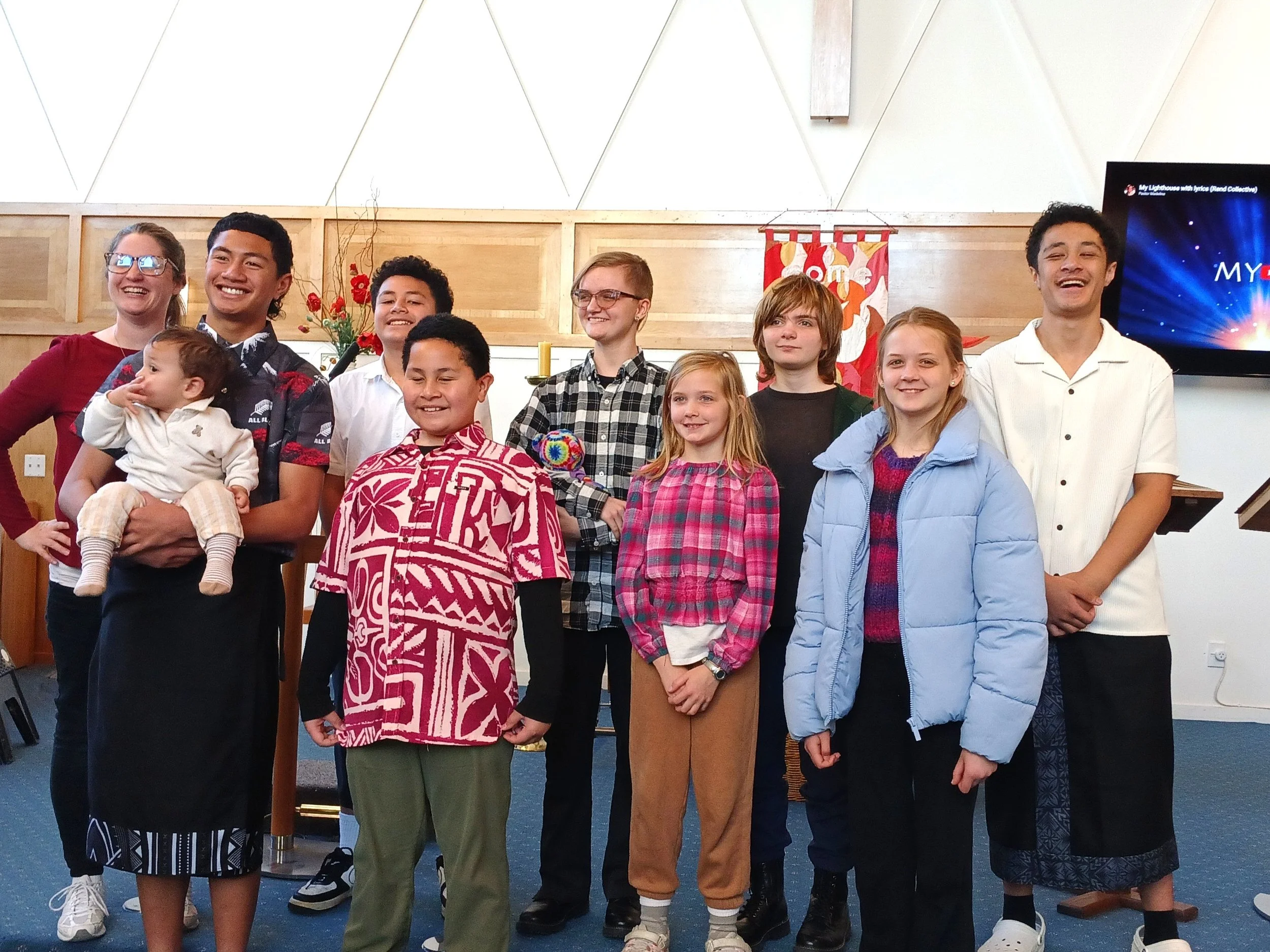
Our rangatahi lead our Pentecost Service on 24 May 2026. They shared some profound stories with wisdom and advice for how we can include, care for, and respect young people.

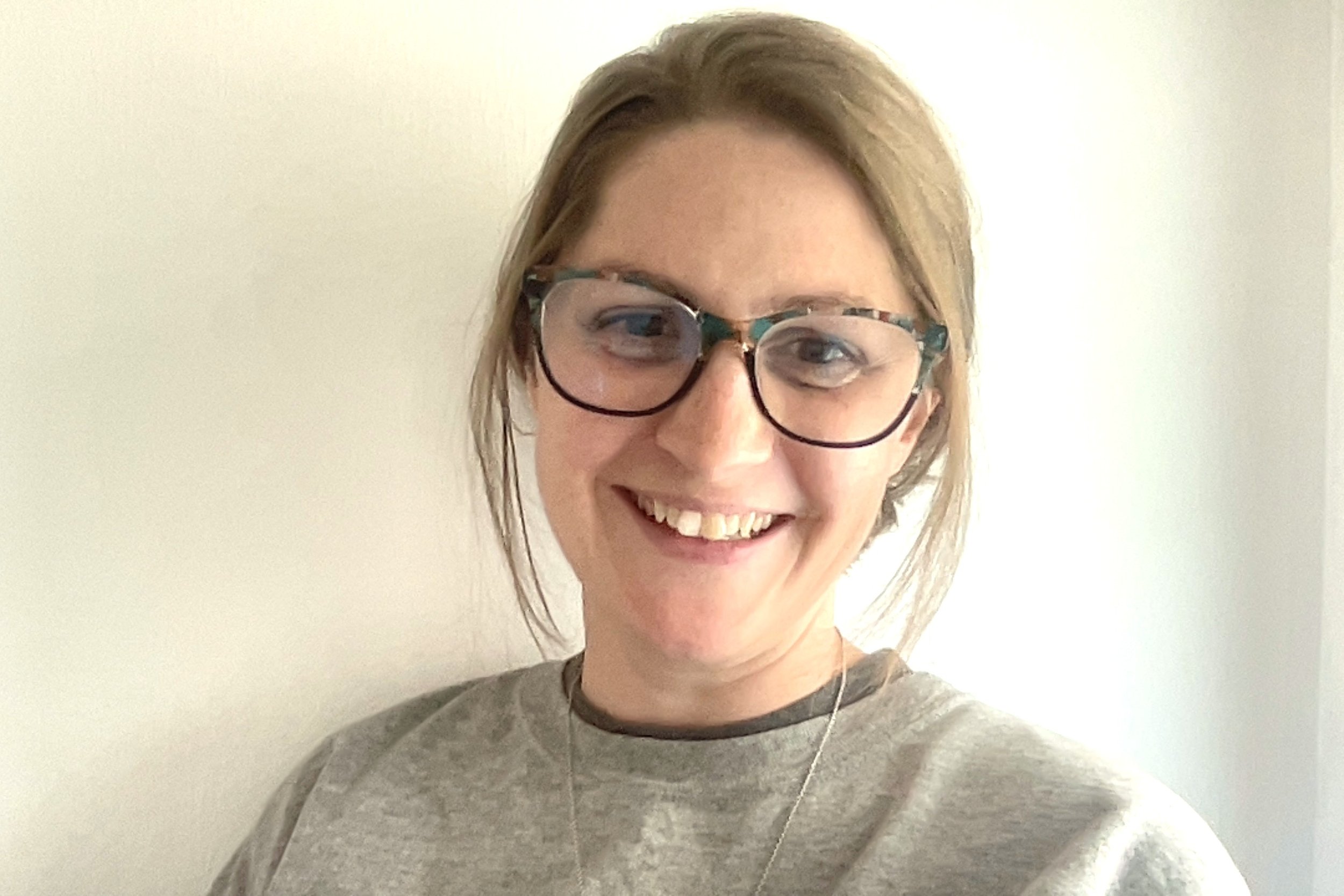
If you’d like to chat further about any questions, doubts, or concerns, please reach out to St. Ninian’s Youth Worker, Amy Remaklus. She is here to support you on your life journey. She can be contacted at: stnup.youth@xtra.co.nz